This list is by no means exhaustive--it's just what we've used and are using right now for the plants portion of our Life Science study (begun last year with animals and the human body). I've found that
my participation in the
100 Species Challenge has come in handy as inspiration to get the kids excited about plants, and about identifying mystery plants. Who doesn't like a mystery?

Non-fiction:
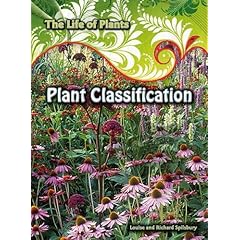
Plant Classification (The Life of Plants), by Louise & Richard Spilsbury. I really like the way this book is laid out--easily digestible 2-page spreads, but enough knowledge to keep my ten-year-old learning. Great photos! Currently checked out from the library but also in my Amazon cart.
Plant (DK Eye Wonder), by Fleur Star. Same 2-page chunks, but less information. Again, nice photos. Just about right for my seven-year-old.

A Seed is Sleepy, by Dianna Hutts Aston and illustrated by Sylvia Long (a favorite). Gorgeous illustrations. Conversational tone. A good bit of information snuck in, too. Great for all three of my kids (10, 7, and almost 4). Have this one out from the library but it's in my Amazon cart to buy soon.
What Kinds of Seeds Are These? by Heidi Bee Roemer and illustrated by Olena Kassian. Aimed at the 4-8 crowd. Shows how seeds travel and what kinds of packages in which seeds come.
What Do Roots Do? by Kathleen Kudlinski. Gives a great view to what happens underground. All three of kids really liked this one.
Trees of North America (Usborne Spotter's Guides), by Alan Mitchell. A lot of information packed into a small, take-along book. The only thing I wish is that it was two books--one for the Eastern Region, and one for the Western. Recommended.
Crinkleroot's Guide to Knowing the Trees, by Jim Arnosky. I love this series of books. Crinkleroot is like Santa Claus meets John Muir as imagined by J.R.R. Tolkien. The books have a nice tone, and the illustrations are sweet. Perfect for my seven-year-old.
Tell Me, Tree--All about Trees for Kids, by Gail Gibbons. We have many books by this author and they're all great. A good amount of information for ages 4-8.

Plants that Never Ever Bloom, by Ruth Heller. This author is a recent find for us--many of her books are now out-of-print, but I believe some of them are being reprinted. This particular title is a little out-of-date (pub. 1984), as well, as it places mushrooms and other fungi in the plant kingdom, but it is still worth checking out if you don't mind explaining how classification can change as scientists gain more knowledge about different species. The book does a great job of covering non-flowering plants, such as mosses, lichens, algae, etc. Highly recommended for ages 6-10.
Autumn Leaves, by Ken Robbins. A basic look at a few trees and their leaves in full autumn splendor. Worth getting from the library. Ages 3-6.
The Flower Alphabet Book, by Jerry Pallotta and illustrated by Leslie Evans. We've liked a lot of Palotta's alphabet books, and this one is a favorite. Will definitely dig it out again in the spring when everything starts to bloom again.
Keepers of Life: Discovering Plants through Native American Stories and Earth Activities for Children, by Joseph Bruchac and Michael J. Caduto. Good for inspiration but not concrete enough for me. For example, we used
the family tree of plants idea from this book, but had to pull information from other books to complete the project.
Shanleya's Quest: a Botany Adventure for Kids Ages 9 to 99, by Thomas J. Elpel and illustrated by Gloria Brown. This one will appeal to any Waldorf-inspired homeschoolers out there. Teaches about plant identification through story. My ten-year-old liked it. I've ordered the author's other book,
Botany in a Day via interlibrary loan.

Fiction:
A Forest of Stories--Magical Tree Tales from around the World, retold by Rina Singh and illustrated by Helen Cann. As with most books from Barefoot Books, the artwork in this book is top-notch. The stories are well told, as well, making this yet another want-to-have in my Amazon cart. All three of my kids listen with full attention when I read from this book!
The Tiny Seed, by Eric Carle. Follows the story of a seed. Ages 4-8.
A Tree Can Be. . . by Judy Nayer and illustrated by Anna Vojtech. A sweet illustrated poem about all the things a tree can be to different people and animals. For ages 2-4.