Modest Mussorgsky was a 19th-century Russian composer, and he wrote some incredibly dramatic music for orchestra and for piano. For this week's Halloween music entry, here is a free download of Night on Bald Mountain from iTunes, courtesy of Paavo Jarvi and the Cincinnati Symphony Orchestra and their CD label, Telarc.
As a bonus, here is a video clip of parts of Mussorgsky's Pictures at an Exhibition along with an old Russian cartoon. Be sure to watch the chicks' ballet at the end!
Classics for Kids is featuring Mussorgsky's music this week. Check it out! There's even a pdf to download with information and activities in it.
Monday, October 20, 2008

Saturday, October 18, 2008

Friday, October 17, 2008
Poetry Friday
I've moved my Poetry Friday posts over to my new blog, A Habit of Reading. Mosey on over and see what we're reading, and check out today's entry in the Poetry Friday Roundup, hosted this week by Becky's Book Reviews.
Poetry Friday - Traditional
The Wind and the Leaves
Traditional
Come, little leaves, said the wind one day,
Come over the meadows with me and play.
Put on your dresses of red and gold.
For summer is gone and the days grow cold.
Soon as the leaves heard the wind's loud call
Down they came fluttering, one and all.
Over the fields they danced and flew
Singing the soft little songs they knew.
Dancing and whirling the little leaves went,
Winter had called them, and they were content
Soon fast asleep on their earthly beds,
The snow laid a coverlet on their heads.
Poetry Friday is being hosted today by Becky's Book Reviews.
Traditional
Come, little leaves, said the wind one day,
Come over the meadows with me and play.
Put on your dresses of red and gold.
For summer is gone and the days grow cold.
Soon as the leaves heard the wind's loud call
Down they came fluttering, one and all.
Over the fields they danced and flew
Singing the soft little songs they knew.
Dancing and whirling the little leaves went,
Winter had called them, and they were content
Soon fast asleep on their earthly beds,
The snow laid a coverlet on their heads.
Poetry Friday is being hosted today by Becky's Book Reviews.
Thursday, October 16, 2008
Learning about plants
I feel good. We're actually getting some things done besides spelling, handwriting, and math. Nature walks are an almost daily habit for us, but I've never really tried to get my kids to learn anything on them--they usually just enjoy the fresh air and exercise, and the view, unless they are grumbling about having to take a walk. Come to think of it, I haven't heard many complaints about walking lately. Ah, something else for which to feel grateful.

But back to the learning part--today we created a "family tree" for plants, of sorts, with brown wrapping paper (courtesy of the local Hallmark store--craft paper would have been better but craft stores are farther away) serving as the trunk and branches of the tree. Having learned the difference between vascular and non-vascular plants, we further divided plants into five categories: on the vascular side of the family, flowering plants, conifers, and ferns; on the non-vascular side, mosses and algae. (If you click on the picture I think you'll be able to see a larger version of the photo.) There are obviously a few we left out--such as horsetails that can be grouped with ferns and liverworts that are spore-bearing plants similar to mosses. Simpler is better for us these days (see getting things done, above).
The fun part was going outside and finding specimens of everything except algae, which we looked for at the pond but came home empty-handed. It would have been tricky to attach to the tree, too, so we used printouts of illustrations and photos of algae from the internet.
The idea for this project came from Keepers of Life, by Michael J. Caduto and Joseph Bruchac. I'm not sure how much we'll end up using this book, though we have enjoyed several of the Native American stories about plant life in it.
For more books we're using to learn about plants, check out this post.

But back to the learning part--today we created a "family tree" for plants, of sorts, with brown wrapping paper (courtesy of the local Hallmark store--craft paper would have been better but craft stores are farther away) serving as the trunk and branches of the tree. Having learned the difference between vascular and non-vascular plants, we further divided plants into five categories: on the vascular side of the family, flowering plants, conifers, and ferns; on the non-vascular side, mosses and algae. (If you click on the picture I think you'll be able to see a larger version of the photo.) There are obviously a few we left out--such as horsetails that can be grouped with ferns and liverworts that are spore-bearing plants similar to mosses. Simpler is better for us these days (see getting things done, above).
The fun part was going outside and finding specimens of everything except algae, which we looked for at the pond but came home empty-handed. It would have been tricky to attach to the tree, too, so we used printouts of illustrations and photos of algae from the internet.
The idea for this project came from Keepers of Life, by Michael J. Caduto and Joseph Bruchac. I'm not sure how much we'll end up using this book, though we have enjoyed several of the Native American stories about plant life in it.
For more books we're using to learn about plants, check out this post.
Botany Books for kids
This list is by no means exhaustive--it's just what we've used and are using right now for the plants portion of our Life Science study (begun last year with animals and the human body). I've found that my participation in the 100 Species Challenge has come in handy as inspiration to get the kids excited about plants, and about identifying mystery plants. Who doesn't like a mystery?

Non-fiction:
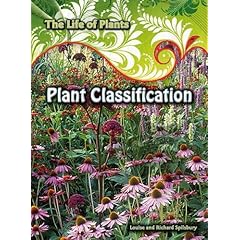
Plant Classification (The Life of Plants), by Louise & Richard Spilsbury. I really like the way this book is laid out--easily digestible 2-page spreads, but enough knowledge to keep my ten-year-old learning. Great photos! Currently checked out from the library but also in my Amazon cart.
Plant (DK Eye Wonder), by Fleur Star. Same 2-page chunks, but less information. Again, nice photos. Just about right for my seven-year-old.
A Seed is Sleepy, by Dianna Hutts Aston and illustrated by Sylvia Long (a favorite). Gorgeous illustrations. Conversational tone. A good bit of information snuck in, too. Great for all three of my kids (10, 7, and almost 4). Have this one out from the library but it's in my Amazon cart to buy soon.
What Kinds of Seeds Are These? by Heidi Bee Roemer and illustrated by Olena Kassian. Aimed at the 4-8 crowd. Shows how seeds travel and what kinds of packages in which seeds come.
What Do Roots Do? by Kathleen Kudlinski. Gives a great view to what happens underground. All three of kids really liked this one.
Trees of North America (Usborne Spotter's Guides), by Alan Mitchell. A lot of information packed into a small, take-along book. The only thing I wish is that it was two books--one for the Eastern Region, and one for the Western. Recommended.
Crinkleroot's Guide to Knowing the Trees, by Jim Arnosky. I love this series of books. Crinkleroot is like Santa Claus meets John Muir as imagined by J.R.R. Tolkien. The books have a nice tone, and the illustrations are sweet. Perfect for my seven-year-old.
Tell Me, Tree--All about Trees for Kids, by Gail Gibbons. We have many books by this author and they're all great. A good amount of information for ages 4-8.

Plants that Never Ever Bloom, by Ruth Heller. This author is a recent find for us--many of her books are now out-of-print, but I believe some of them are being reprinted. This particular title is a little out-of-date (pub. 1984), as well, as it places mushrooms and other fungi in the plant kingdom, but it is still worth checking out if you don't mind explaining how classification can change as scientists gain more knowledge about different species. The book does a great job of covering non-flowering plants, such as mosses, lichens, algae, etc. Highly recommended for ages 6-10.
Autumn Leaves, by Ken Robbins. A basic look at a few trees and their leaves in full autumn splendor. Worth getting from the library. Ages 3-6.
The Flower Alphabet Book, by Jerry Pallotta and illustrated by Leslie Evans. We've liked a lot of Palotta's alphabet books, and this one is a favorite. Will definitely dig it out again in the spring when everything starts to bloom again.
Keepers of Life: Discovering Plants through Native American Stories and Earth Activities for Children, by Joseph Bruchac and Michael J. Caduto. Good for inspiration but not concrete enough for me. For example, we used the family tree of plants idea from this book, but had to pull information from other books to complete the project.
Shanleya's Quest: a Botany Adventure for Kids Ages 9 to 99, by Thomas J. Elpel and illustrated by Gloria Brown. This one will appeal to any Waldorf-inspired homeschoolers out there. Teaches about plant identification through story. My ten-year-old liked it. I've ordered the author's other book, Botany in a Day via interlibrary loan.

Fiction:
A Forest of Stories--Magical Tree Tales from around the World, retold by Rina Singh and illustrated by Helen Cann. As with most books from Barefoot Books, the artwork in this book is top-notch. The stories are well told, as well, making this yet another want-to-have in my Amazon cart. All three of my kids listen with full attention when I read from this book!
The Tiny Seed, by Eric Carle. Follows the story of a seed. Ages 4-8.
A Tree Can Be. . . by Judy Nayer and illustrated by Anna Vojtech. A sweet illustrated poem about all the things a tree can be to different people and animals. For ages 2-4.
Non-fiction:
Plant Classification (The Life of Plants), by Louise & Richard Spilsbury. I really like the way this book is laid out--easily digestible 2-page spreads, but enough knowledge to keep my ten-year-old learning. Great photos! Currently checked out from the library but also in my Amazon cart.
Plant (DK Eye Wonder), by Fleur Star. Same 2-page chunks, but less information. Again, nice photos. Just about right for my seven-year-old.

A Seed is Sleepy, by Dianna Hutts Aston and illustrated by Sylvia Long (a favorite). Gorgeous illustrations. Conversational tone. A good bit of information snuck in, too. Great for all three of my kids (10, 7, and almost 4). Have this one out from the library but it's in my Amazon cart to buy soon.
What Kinds of Seeds Are These? by Heidi Bee Roemer and illustrated by Olena Kassian. Aimed at the 4-8 crowd. Shows how seeds travel and what kinds of packages in which seeds come.
What Do Roots Do? by Kathleen Kudlinski. Gives a great view to what happens underground. All three of kids really liked this one.
Trees of North America (Usborne Spotter's Guides), by Alan Mitchell. A lot of information packed into a small, take-along book. The only thing I wish is that it was two books--one for the Eastern Region, and one for the Western. Recommended.
Crinkleroot's Guide to Knowing the Trees, by Jim Arnosky. I love this series of books. Crinkleroot is like Santa Claus meets John Muir as imagined by J.R.R. Tolkien. The books have a nice tone, and the illustrations are sweet. Perfect for my seven-year-old.
Tell Me, Tree--All about Trees for Kids, by Gail Gibbons. We have many books by this author and they're all great. A good amount of information for ages 4-8.

Plants that Never Ever Bloom, by Ruth Heller. This author is a recent find for us--many of her books are now out-of-print, but I believe some of them are being reprinted. This particular title is a little out-of-date (pub. 1984), as well, as it places mushrooms and other fungi in the plant kingdom, but it is still worth checking out if you don't mind explaining how classification can change as scientists gain more knowledge about different species. The book does a great job of covering non-flowering plants, such as mosses, lichens, algae, etc. Highly recommended for ages 6-10.
Autumn Leaves, by Ken Robbins. A basic look at a few trees and their leaves in full autumn splendor. Worth getting from the library. Ages 3-6.
The Flower Alphabet Book, by Jerry Pallotta and illustrated by Leslie Evans. We've liked a lot of Palotta's alphabet books, and this one is a favorite. Will definitely dig it out again in the spring when everything starts to bloom again.
Keepers of Life: Discovering Plants through Native American Stories and Earth Activities for Children, by Joseph Bruchac and Michael J. Caduto. Good for inspiration but not concrete enough for me. For example, we used the family tree of plants idea from this book, but had to pull information from other books to complete the project.
Shanleya's Quest: a Botany Adventure for Kids Ages 9 to 99, by Thomas J. Elpel and illustrated by Gloria Brown. This one will appeal to any Waldorf-inspired homeschoolers out there. Teaches about plant identification through story. My ten-year-old liked it. I've ordered the author's other book, Botany in a Day via interlibrary loan.

Fiction:
A Forest of Stories--Magical Tree Tales from around the World, retold by Rina Singh and illustrated by Helen Cann. As with most books from Barefoot Books, the artwork in this book is top-notch. The stories are well told, as well, making this yet another want-to-have in my Amazon cart. All three of my kids listen with full attention when I read from this book!
The Tiny Seed, by Eric Carle. Follows the story of a seed. Ages 4-8.
A Tree Can Be. . . by Judy Nayer and illustrated by Anna Vojtech. A sweet illustrated poem about all the things a tree can be to different people and animals. For ages 2-4.
Monday, October 13, 2008
The City of Ember, Pt. 2
Dave at Night has been deleted from FB's fall line-up. It's one I hadn't preread--I had read Ella Enchanted (also by Gail Carson Levine) and had read somewhere that Dave at Night was the author's favorite book she had written. The story deals with some brutality experienced by the main character while in a NYC orphanage, though, and, given the make-up of our group, with younger kids in it than originally planned and every member in it (including their fearless leader) on the sensitive side, we're going to pass on this book for now.
On to the second day we spent on The City of Ember. We began with some general questions, which you can find here (click the link and a pdf should download). The kids had a lot to say--it was an excellent discussion. After the kids had talked themselves out, we moved on to an online animated visual aid of how a hydro-powered generator works, with additional photographs of actual generators on the same page. Then we also watched the trailer for the movie and talked about how the story can often change in being translated from book to screen.
The previous week we had read aloud the part of the story when Clary sees Lina's bean plant beginning to grow on her windowsill, and this week we planted bean plants in individual plants which the kids took home.
The kids's enthusiasm for this book made it an easy one to discuss. They liked the first book they read for the group (Chasing Vermeer--look for a blog entry about this book soon), but they loved The City of Ember. Most of them are currently reading The People of Sparks, with plans to finish the series.
On to the second day we spent on The City of Ember. We began with some general questions, which you can find here (click the link and a pdf should download). The kids had a lot to say--it was an excellent discussion. After the kids had talked themselves out, we moved on to an online animated visual aid of how a hydro-powered generator works, with additional photographs of actual generators on the same page. Then we also watched the trailer for the movie and talked about how the story can often change in being translated from book to screen.
The previous week we had read aloud the part of the story when Clary sees Lina's bean plant beginning to grow on her windowsill, and this week we planted bean plants in individual plants which the kids took home.
The kids's enthusiasm for this book made it an easy one to discuss. They liked the first book they read for the group (Chasing Vermeer--look for a blog entry about this book soon), but they loved The City of Ember. Most of them are currently reading The People of Sparks, with plans to finish the series.
Music Monday - Halloween Music No. 2
Okay, so maybe it's not really that spooky, and I wish it was longer, but my entry for today is the opening theme of the Sherlock Holmes series that aired on Mystery on PBS from the mid-1980's through the mid-1990's. I've loved it for a long time. Patrick Gowers wrote the main theme (it's only 47 seconds long!) and also music for thirty-three episodes. Mp3s of music from the series are available from iTunes under the title, "Sherlock Holmes (Granada Television Production Soundtrack)." A bonus in the following YouTube video is that you get to see the opening for Mystery in general, with an introduction by Vincent Price, may he R.I.P.
Sunday, October 12, 2008
Sunday Dinner
In honor of my mother-in-law's visit this weekend, I made a mostly traditional Sunday dinner today. Yankee Pot Roast, raw summer squash and zucchini because I forgot until too late to peel, slice, and cook the carrots and parsnips (we eat our veg raw in the summer, so it's hard to remember to get them back to the stove in the fall), mashed potatoes (the real deal) and (here's the exciting part) Caramel Apple Pudding Cake. I didn't have time to bake an apple pie today, what with all the gorgeous New England autumn weather to enjoy, so I opted for an ostensibly less time-consuming new recipe, and it was delectable! There are a couple of ingredients I left out so everyone could and would enjoy the dessert, but here's the recipe, slightly altered, from my old standby, The Better Homes and Gardens Cook Book:
Caramel Apple Pudding Cake
Prep: 25 minutes Bakes 35 minutes
Oven: 350 degrees F Makes 12 servings (hmm, I'd probably say 10)
2 cups thinly sliced, peeled tart apples (I used Cortland apples, my preferred pie apple, but the ever present Granny Smith or any other tart cooking apple would work equally well)
3 T. freshly squeezed lemon juice
1/2 t. (heaping) ground, excellent quality cinnamon
1/8 t. nutmeg OR cardamom, if you happen to be out of nutmeg, as I was
(1/4 c. raisins or dried cherries, optional)
1 c. all-purpose flour
3/4 c. dark brown sugar
1 t. baking powder
1/2 t. baking soda
1/2 c. milk
2 T. butter, melted
1 t. vanilla
(1/2 c. chopped pecans or walnuts, optional)
3/4 c. caramel topping for ice cream
1/2 c. water
1 T. butter
Vanilla ice cream (mandatory!)
1. Grease a 2-quart baking dish. BH&G calls for a square dish, but I used my 2-qt. rectangular Pyrex to no ill effect. Put apples evenly in the bottom of the dish. Sprinkle with lemon juice, cinnamon, and nutmeg. (Top with raisins or cherries, if using.)
2. In a large bowl, combine flour, brown sugar, baking powder, and baking soda. Add milk, the 2 T. melted butter, and vanilla, and mix well. (Stir in nuts, if using.) Spread the batter evenly over the apple mixture.
3. In a small saucepan, combine the caramel topping, water, and 1 T. butter; bring to boiling. Pour mixture evenly over batter in baking dish.
4. Bake in a preheated 350 degree F. oven for about 35-40 minutes or until the center is set. Let cool slightly. While still warm, spoon into bowls and top with ice cream. Enjoy!
Caramel Apple Pudding Cake
Prep: 25 minutes Bakes 35 minutes
Oven: 350 degrees F Makes 12 servings (hmm, I'd probably say 10)
2 cups thinly sliced, peeled tart apples (I used Cortland apples, my preferred pie apple, but the ever present Granny Smith or any other tart cooking apple would work equally well)
3 T. freshly squeezed lemon juice
1/2 t. (heaping) ground, excellent quality cinnamon
1/8 t. nutmeg OR cardamom, if you happen to be out of nutmeg, as I was
(1/4 c. raisins or dried cherries, optional)
1 c. all-purpose flour
3/4 c. dark brown sugar
1 t. baking powder
1/2 t. baking soda
1/2 c. milk
2 T. butter, melted
1 t. vanilla
(1/2 c. chopped pecans or walnuts, optional)
3/4 c. caramel topping for ice cream
1/2 c. water
1 T. butter
Vanilla ice cream (mandatory!)
1. Grease a 2-quart baking dish. BH&G calls for a square dish, but I used my 2-qt. rectangular Pyrex to no ill effect. Put apples evenly in the bottom of the dish. Sprinkle with lemon juice, cinnamon, and nutmeg. (Top with raisins or cherries, if using.)
2. In a large bowl, combine flour, brown sugar, baking powder, and baking soda. Add milk, the 2 T. melted butter, and vanilla, and mix well. (Stir in nuts, if using.) Spread the batter evenly over the apple mixture.
3. In a small saucepan, combine the caramel topping, water, and 1 T. butter; bring to boiling. Pour mixture evenly over batter in baking dish.
4. Bake in a preheated 350 degree F. oven for about 35-40 minutes or until the center is set. Let cool slightly. While still warm, spoon into bowls and top with ice cream. Enjoy!
Saturday, October 11, 2008
Those crazy creative people.
And you thought it was just the late stages of syphilis that caused the likes of Schumann and Schubert to go mad. But no, a recent study by psychologists from Harvard University and the University of Toronto may link creativity to psychosis. From Science News at Science Daily:
You can read the rest of the article, which was adapted from materials provided by the University of Toronto, here at Science Daily.
The study in the September issue of the Journal of Personality and Social Psychology says the brains of creative people appear to be more open to incoming stimuli from the surrounding environment. Other people's brains might shut out this same information through a process called "latent inhibition" - defined as an animal's unconscious capacity to ignore stimuli that experience has shown are irrelevant to its needs. Through psychological testing, the researchers showed that creative individuals are much more likely to have low levels of latent inhibition.
"This means that creative individuals remain in contact with the extra information constantly streaming in from the environment," says co-author and U of T psychology professor Jordan Peterson. "The normal person classifies an object, and then forgets about it, even though that object is much more complex and interesting than he or she thinks. The creative person, by contrast, is always open to new possibilities."
. . . .
"Scientists have wondered for a long time why madness and creativity seem linked," says Carson. "It appears likely that low levels of latent inhibition and exceptional flexibility in thought might predispose to mental illness under some conditions and to creative accomplishment under others."
You can read the rest of the article, which was adapted from materials provided by the University of Toronto, here at Science Daily.
The City of Ember, Pt. 1
FB (Favorite Books, the book discussion group at our co-op) just finished The City of Ember, by Jeanne DuPrau. I had no idea what good timing it would work out to be--the movie opened yesterday!
The group was set up to have activities the first week of two spent on a book, and discussion the second, but I've found that it works better to mix the two up. And since Monday is Columbus Day, the co-op isn't meeting, and I've decided that Dave at Night (by Gail Carson Levine, author of Ella Enchanted), our next book, can be squeezed into one week.
During our first week spent on Ember, we discussed where everyone was in the book (only one child, mine, hadn't yet started it), read the introduction aloud, and talked about what we knew about Ember from these few pages, and what we didn't know. Then we read aloud a bit in the first chapter where Lina (pronounced LY-na, according to the author, which the movie disregards) and Doon are given their job placements. The kids picked mock assignments from a green felt bag I whipped together Sunday night and read aloud from job description sheets I made. We talked about how it would feel to be assigned to a profession for at least three years and to have very little choice in the matter. The kids responded with ways they would get out of jobs they didn't like.
Then most of the children participated in making a book of Crawling and Flying Things, which I will color-copy and give to each child to make into a book of their own. The plan was to bring my computer the second week to input descriptions of the bugs they created (from cutting and pasting ETC clipart insects), but we didn't end up with enough time the second week to do so, so I will let each child fill in the descriptions for each bug by hand on their own.
For the remainder of the first week's time, the kids decoded a "secret message" (a la the Instructions for Egress) I created by writing a note to them, and then leaving out 1-3 letters in each word. To make it easier, I put a list of the letters the would need at the top of the page (A A A A C D D E E, etc.). This was the biggest success of the day.
When I figure out how to post my pdfs for each activity, I'll put a link here. In the meantime, here are some links I found helpful for week one:
Teachers@Random--The City of Ember
Literature to the Rescue by Lynne Farrell Stover (a pdf)
BookClubs.ca--The City of Ember
Part 2, coming soon!
The group was set up to have activities the first week of two spent on a book, and discussion the second, but I've found that it works better to mix the two up. And since Monday is Columbus Day, the co-op isn't meeting, and I've decided that Dave at Night (by Gail Carson Levine, author of Ella Enchanted), our next book, can be squeezed into one week.
During our first week spent on Ember, we discussed where everyone was in the book (only one child, mine, hadn't yet started it), read the introduction aloud, and talked about what we knew about Ember from these few pages, and what we didn't know. Then we read aloud a bit in the first chapter where Lina (pronounced LY-na, according to the author, which the movie disregards) and Doon are given their job placements. The kids picked mock assignments from a green felt bag I whipped together Sunday night and read aloud from job description sheets I made. We talked about how it would feel to be assigned to a profession for at least three years and to have very little choice in the matter. The kids responded with ways they would get out of jobs they didn't like.
Then most of the children participated in making a book of Crawling and Flying Things, which I will color-copy and give to each child to make into a book of their own. The plan was to bring my computer the second week to input descriptions of the bugs they created (from cutting and pasting ETC clipart insects), but we didn't end up with enough time the second week to do so, so I will let each child fill in the descriptions for each bug by hand on their own.
For the remainder of the first week's time, the kids decoded a "secret message" (a la the Instructions for Egress) I created by writing a note to them, and then leaving out 1-3 letters in each word. To make it easier, I put a list of the letters the would need at the top of the page (A A A A C D D E E, etc.). This was the biggest success of the day.
When I figure out how to post my pdfs for each activity, I'll put a link here. In the meantime, here are some links I found helpful for week one:
Teachers@Random--The City of Ember
Literature to the Rescue by Lynne Farrell Stover (a pdf)
BookClubs.ca--The City of Ember
Part 2, coming soon!
Friday, October 10, 2008

Beginning Anew
My other blog, Rockhound Place, has taken on a life of its own as a place to record music, poetry, and trivia, plus occasional whining sessions and even more infrequent opinionated pieces. Books are getting shoved to the side (literally), and I don't like it! If I had to choose between books and music, I would be agonizingly hard-pressed to make a decision between them. Luckily, I don't have to choose, and have started this blog to record specifically any children's or YA books that are being read in my house, either by me or my kids.
I'm currently running a book discussion group for kids reading at or above the fifth grade level at our homeschooling co-op, so I may record what we've done in that group from time to time, if I think others might eventually wind their way here and find what I've pulled together on a title useful.
TTFN!
I'm currently running a book discussion group for kids reading at or above the fifth grade level at our homeschooling co-op, so I may record what we've done in that group from time to time, if I think others might eventually wind their way here and find what I've pulled together on a title useful.
TTFN!
Better late than never
This visual aid works nicely in conjunction with the SNL version of the VP debate:

If America elects this woman and her running mate, I'm moving here:
 I'll miss the fall leaves and the first snow, but them's the breaks. . .

If America elects this woman and her running mate, I'm moving here:
 I'll miss the fall leaves and the first snow, but them's the breaks. . .
Poetry Friday - John Haines (b. 1924)

If the Owl Calls Again
by John Haines
at dusk from the island in the river, and it's not too cold, I'll wait for the moon to rise, then take wing and glide to meet him. We will not speak. . .
This poem is still under copyright, but you can read the rest of it here. It's not my usual fare, but I loved it, and want to find more of this poet's works to read. Inspiration to find a poem like this came in the form of owls calling to each other in the night outside my window.
Poetry Friday is being hosted this week by Picture Book of the Day. Check it out! You can view the schedule of where Poetry Friday is being hosted in the coming weeks here, on the blog where it all began.
Steppin' Out
Thanks to LB and her video clip of Get Happy, I just spent an hour on YouTube (Yes, I Blame You). Just thought I'd share another of this year's chorus songs, as danced by the incomparable Fred Astaire.
Tuesday, October 07, 2008
Because I'm still awake and it's a new day:
"Blind respect for authority is the greatest enemy of truth."
-Albert Einstein

-Albert Einstein

Monday, October 06, 2008
Music Monday - Halloween Music No. 1
In honor of that most enjoyable of holidays which is fast approaching (25 days and counting), I give you this extraordinary version of Danse Macabre by Camille Saint-Saens as performed by Vesko Eshkenazy.
This work is usually performed by a full orchestra, though arrangements for piano solo (by Franz Liszt and by Vladimir Horowitz) and for organ solo (arr. Lemare) and likely others also exist. I like this arrangement for violin and piano, which is probably the one transcribed by the composer himself.
As an aside, I first heard a snippet of this piece as the introduction of the British tv mystery series Jonathan Creek, and had to investigate to find out what larger work to which it belonged. I must have heard it before (I've been listening to classical music since I was in the womb), but it never clicked with me before that time. Tune in next week for another great violin piece from a fantastic mystery series.
This work is usually performed by a full orchestra, though arrangements for piano solo (by Franz Liszt and by Vladimir Horowitz) and for organ solo (arr. Lemare) and likely others also exist. I like this arrangement for violin and piano, which is probably the one transcribed by the composer himself.
As an aside, I first heard a snippet of this piece as the introduction of the British tv mystery series Jonathan Creek, and had to investigate to find out what larger work to which it belonged. I must have heard it before (I've been listening to classical music since I was in the womb), but it never clicked with me before that time. Tune in next week for another great violin piece from a fantastic mystery series.
Sunday, October 05, 2008
Friday, October 03, 2008
Poetry Friday - Margaret Morgan
The Oak and the Reed
MARGARET MORGAN
The great oak tree
Thinks he's the strongest
As he's been standing
There the longest.
The wind it blew,
The rain came lashing;
And down the great oak tree
Came crashing.
The slender reed
She knows much better,
For she can bend
In stormy weather.
The slender reed
Swayed in the weather,
And at the dawn
Was strong as ever.
MARGARET MORGAN
The great oak tree
Thinks he's the strongest
As he's been standing
There the longest.
The wind it blew,
The rain came lashing;
And down the great oak tree
Came crashing.
The slender reed
She knows much better,
For she can bend
In stormy weather.
The slender reed
Swayed in the weather,
And at the dawn
Was strong as ever.

Subscribe to:
Posts (Atom)